
Can You Afford to Study in Australia?
Loans, Fixed Deposits and Financial Documents Explained
 By Deepika Narula
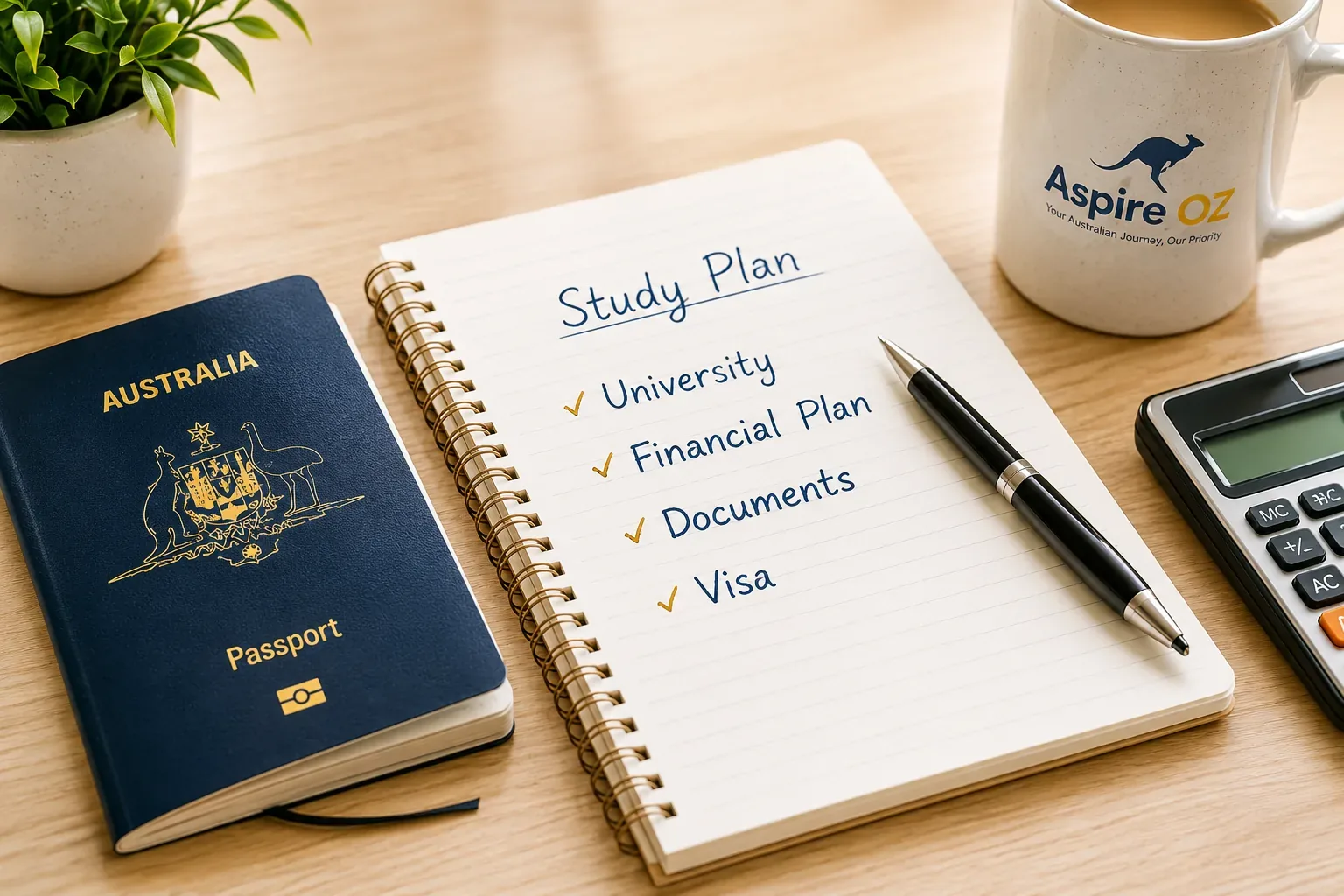
Providing financial capacity is not about proving you are wealthy. It is about demonstrating that your study plan is genuine, well-planned and financially sustainable.
1. Why Financial Credibility Matters
Many families believe financial documents are only required for visa filing. In practice, universities often assess an applicant's ability to fund studies before issuing a Confirmation of Enrolment (CoE).
The Australian Government also assesses financial capacity in student visa applications. Together, universities and the Department of Home Affairs want to see that your education and living expenses are realistically covered.
Your financial documents are not simply paperwork. They are part of the story that supports your application.
2. How Can You Demonstrate Financial Capacity?
The Australian framework generally accepts two pathways to demonstrate financial capacity:
Option 1: Show Sufficient Funds
At a minimum, your evidence should account for tuition, travel costs and living expenses for the required period.
- Travel costs to Australia
- 12 months of tuition fees
- 12 months of living expenses for student and accompanying members
- School fees for dependent school-age children (if applicable)
- Student: AUD 29,710
- Partner: AUD 10,394
- Each dependent child: AUD 4,449
Option 2: The Income Pathway
Instead of showing large liquid savings, you may satisfy the financial requirement by demonstrating that your parents' (or your partner's) annual income meets the threshold.
Applicants without accompanying family members
Applicants with accompanying family members
If both parents are employed, their combined annual income may be considered.
3. What Sources of Funds Are Usually Accepted?
Education Loan
One of the strongest ways to demonstrate financial capacity when issued by recognized lenders.
- Use sanctioned and verifiable loans
- Disbursement letters and Loan account statements are mandatory
- Add repayment or collateral details when applicable
Fixed Deposits (FDs)
Accepted when supported with source clarity and stable holding history.
- FDs should be in student/parent/guardian name
- Avoid creating new FDs immediately before filing
- Provide source-of-funds explanation where needed
Savings Account Balances
Liquid funds can be used when the account activity is consistent and explainable.
- Show 3 to 6 months of statements
- Explain any large one-off credits clearly
- Keep the money trail aligned with declared source
Family Sponsorship
Commonly used by parents or immediate family members for undergraduate and postgraduate applicants.
- Relationship with student must be documented
- Sponsor income and taxation proof is essential
- Support commitment should be explicit
4. Common Mistakes and a Better Checklist
Common Financial Mistakes
- Large last-minute deposits without source explanation
- Missing or incomplete sponsor documents
- Inconsistent figures across forms and statements
- Over-reliance on non-liquid assets
- No clear link between funds and study plan
Sponsor Document Checklist
- Sponsorship declaration or affidavit
- Identity documents of sponsor
- Relationship proof (birth certificate or equivalent)
- ITR for recent 2 to 3 years
- Employment or business evidence
- Recent 3 to 6 months bank statements
Aspire OZ Perspective
Universities and visa officers look for logic and consistency, not just document quantity.
When your financial documents, sponsorship explanation and GS responses all support one narrative, your application becomes much stronger.
Deepika Narula